

Investing in Affordable Homes for Las Cruces Families
As part of the state’s $120 million investment in housing and homelessness solutions, the Office of Housing is partnering with the City of Las Cruces to expand access to safe, affordable homes across southern New Mexico.
These five housing construction projects will add 358 new homes for families, seniors, and first-time homebuyers, supporting one of the state’s fastest-growing regions and helping ensure that more New Mexicans can live where they work.
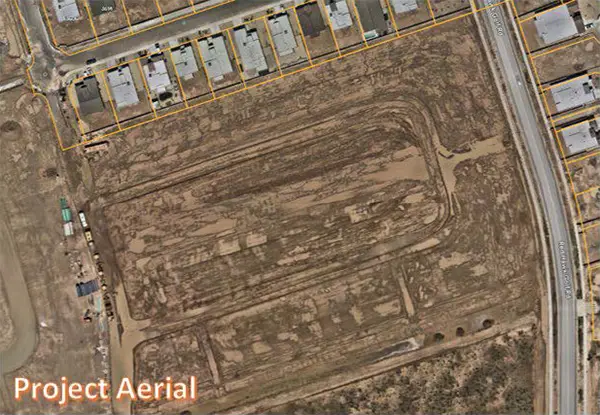
Aerial image of Arcadia 4 site
Arcadia 4 Subdivision Housing Project
In Progress
Total Investment: $3.25 million
Number of Units: 52
Affordability: Up to 120% of area median income (affordable to middle-income households) | 15-year affordability
About the Project:
Arcadia 4 will create 52 single-family homes for first-time and moderate-income homebuyers in the Metro Verde neighborhood. Built in partnership with local nonprofit housing organizations, the project expands attainable homeownership options and supports workforce retention in one of Las Cruces’s fastest-growing areas.
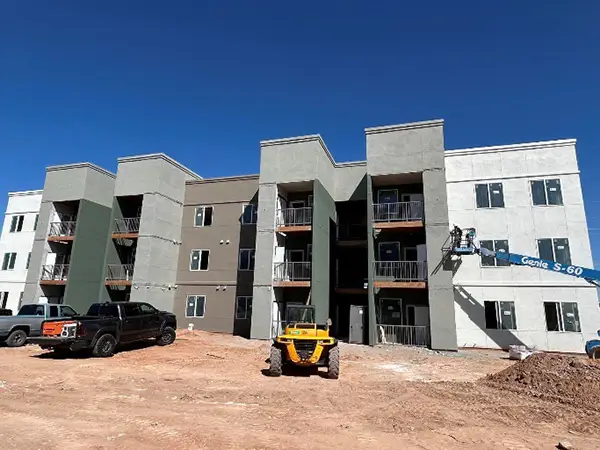
Construction underway at Peachtree Phase I
Peachtree Phase I Housing Project
Complete
Total Investment: $4.3 million
Number of Units: 144
Affordability: Up to 60% of area median income (affordable to low-income households) | 20-year affordability
About the Project:
Peachtree Canyon Apartments will add 144 new rental homes for working families and individuals earning up to 60% of the local median income. Designed as part of a larger multi-phase community, the development will include shared outdoor spaces and community amenities to promote safety, connection, and long-term housing stability.
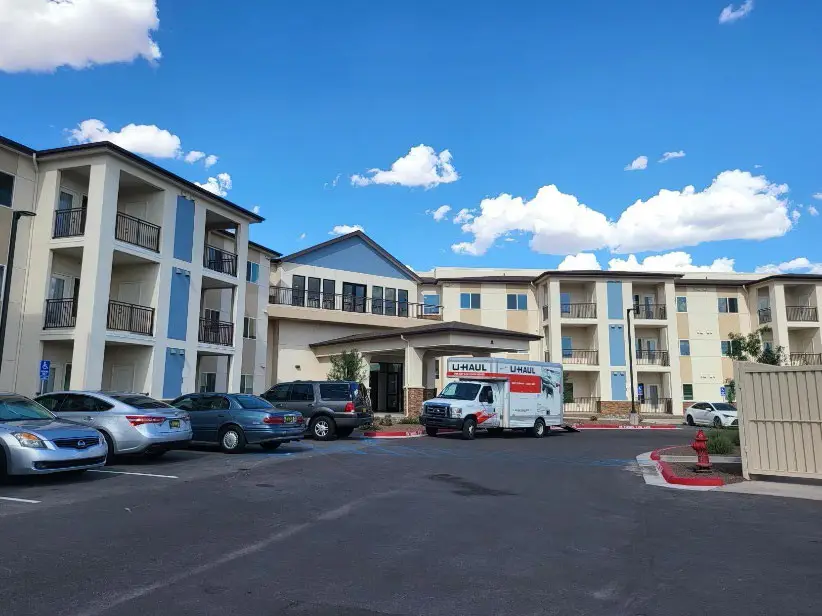
Residents moving in to the partially completed Pedreña Senior Apartments
Pedreña Senior Apartments Housing Project
Partially Complete
Total Investment: $400,000
Number of Units: 80
Affordability: Up to 60% of area median income (affordable to low-income seniors) | 20-year affordability
About the Project:
Pedreña Senior Apartments will provide 80 affordable, age-restricted homes for residents aged 55 and older. The project will include accessible units, shared community areas, and design features that support aging in place, ensuring older adults can remain safely housed within their community.
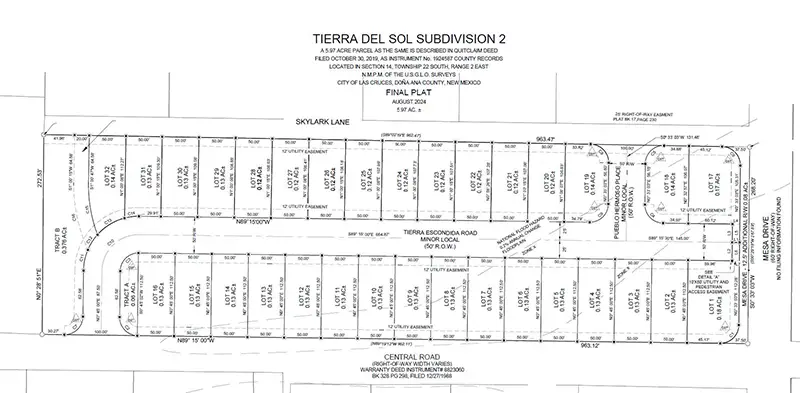
Site plan for Skylark Subdivision
Skylark Subdivision Housing Project
Planning Phase
Total Investment: $1.4 million
Number of Units: 32
Affordability: Up to 120% of area median income (affordable to middle-income families) | 15-year affordability
About the Project:
Skylark will add 32 homes for working families and individuals earning up to 120% of the local median income. This project will expand affordable housing capacity for affordable to middle-income families in Las Cruces.
Understanding Measures of Affordability
The affordability of housing is often measured by Area Median Income (AMI)—the midpoint of household income for a region.
- 30% of AMI generally reflects very low-income households (for example, individuals or families earning roughly $20,000–$25,000 per year in Bernalillo County).
- 60% of AMI reflects low-income households, often earning between $35,000–$45,000 per year.
- 80% of AMI reflects moderate-income households, such as teachers, health aides, and service workers earning around $55,000–$60,000 per year.
Projects that list a specific “period of affordability” (for example, 20-year affordability) must remain affordable for that length of time under the terms of their state funding. That means rents or sale prices are limited to stay affordable to households within the income range listed, helping ensure that state investments provide long-term housing stability rather than short-term relief.
All projects are designed so that residents pay no more than 30% of their income on housing costs, ensuring affordability and stability for New Mexicans across income levels.